
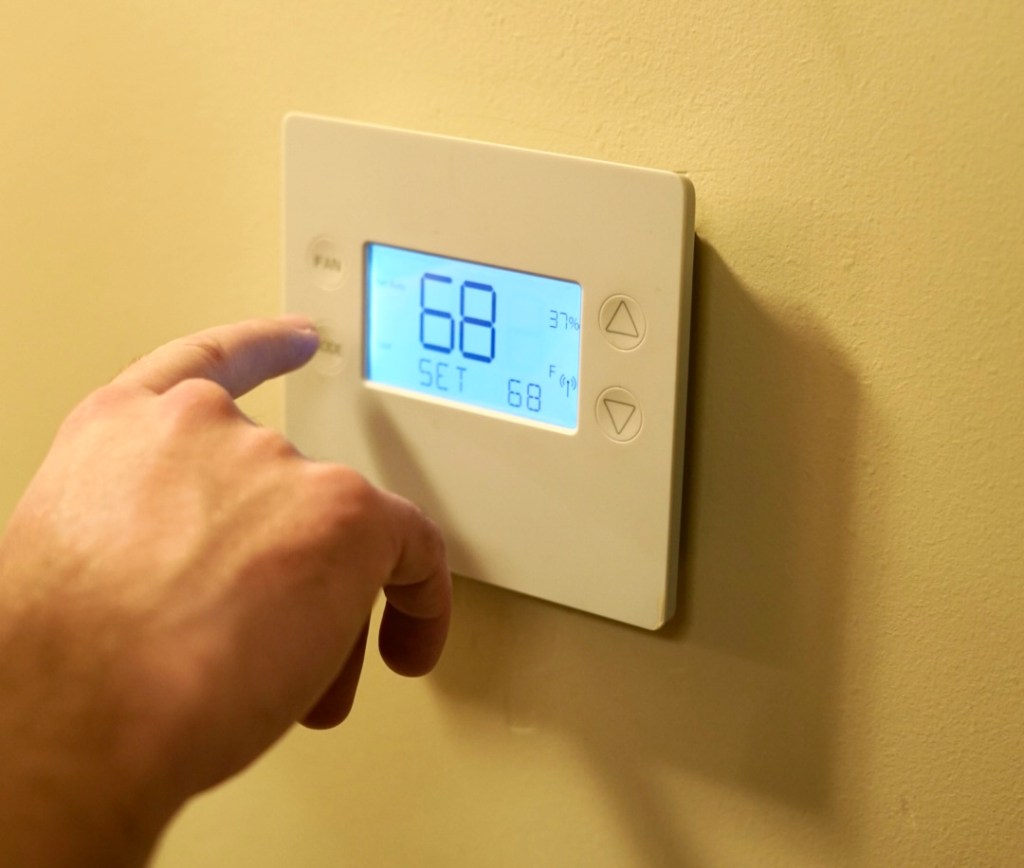
One of the most common questions our customers ask is, “What temperature should I set my thermostat to?” And boy, can that answer vary. Most power companies recommend 78°F for the best efficiency, and some news outlets suggest 78°F during the day to 72°F at night. Other sources say 72°F at all times, and a sleep specialist says 60°-67°F during the night for an optimal sleeping environment…
How can we possibly decide?
That all depends on what makes you comfortable, and the abilities of the system(s) you have in your home. The biggest issue we are seeing with each entity making their own determinations on what temperature is best, is that they are simply giving a blanketed number for all— and unfortunately, that doesn’t work very well. Each system is different, each person is different, and each household has different needs. Plus, geography matters; what works in Alaska isn’t going to work the same in Arizona.
Air conditioning is there for your comfort, and really, the only things that can truly determine your thermostat settings are your needs, your system’s capabilities, and the actual manufacturer recommendations. These systems aren’t designed to go below 70°F when in cool mode (this information can be found in most installation manuals for air conditioning units/systems). These systems are also designed to be efficient at maintaining/holding the temperature- they have to work harder to lower the temperature inside. Anyone that tells you that you should change your temperature more than 5°F in any direction is unintentionally recommending that you overwork your system, and we certainly don’t want that for anyone. Yes, these systems are designed to cool, and they can cool. However, depending on the temperature you lower the thermostat to when arriving home, or when going to bed, you should generally set your thermostat within 5°F of that temperature for better efficiency. You can also use the programming on your thermostat (most newer thermostats have a programming option) to make adjustments of the temperature throughout the day to further improve efficiency.
Note: For people who can remotely access their thermostat, adjusting the temperature gradually throughout the day or afternoon may improve efficiency as well. Additionally, please be aware that geofencing can carry its own set of challenges— you’ll want to make sure that you fine tune your settings. In some cases, it may not be beneficial to use altogether. Geofencing typically follows the thermostat account owner by default, and may negatively impact other occupants of the home when the account owner leaves.
The majority of manufacturers say (which can be found in the manual) that the system will lower the temperature by 1°F per hour. That said, this rating is for when the unit is working in PERFECT conditions. Manufacturers get their numbers under highly controlled testing settings for the equipment, and equipment never works exactly the same in most homes as it does in a test facility with limited variables. That’s why we are here! We have worked with these systems in many different temperatures and climates and have a great understanding of how they will/can operate in real-life settings.
We have witnessed many of the systems we work on operating faster than 1°F per hour, but we have also seen equipment take closer to 2-3 hours to lower the temperature by 1°F as well. This change will depend on many things, including but not limited to:
- The outside temperature
- Size of the house
- Size of the system
- Number of vents/registers
- Number of returns
- How well the air is moving within the home
- Location of the thermostat
- How many windows are in the home and are letting in light
- Humidity in the house
- How well the outdoor unit is removing the heat from the house
- If windows or doors are being opened or closed throughout the day
The system efficiency and the comfortability of your home go hand in hand. You can still operate the system efficiently while keeping the temperature lower inside the house, despite what those other sites and articles may say. Based on how your household operates (combining the habits of the people and pets in the home with the list above, and any other potential factors), we’ll give you a tailored plan on how to best achieve that balance. Regardless of what temperature you set your thermostat to, if you have a busy household -people going in and out often- the system will have to work harder and will be less efficient. There is nothing that can be done to change that fact, as when you open doors, you allow hot air in; and the hotter it is outside, the more frequently the system has to operate. This is NOT a problem or issue with the system, this is just called life.
One other thing we have to remember is that not all thermostats are created equally. You can set your thermostat to 70°F and it will never turn your air conditioning on, and there could be absolutely nothing wrong with your thermostat or system. A crucial step is making sure that the system is set to operate in cooling mode, and this can sometimes be tricky. If your thermostat is showing heat and you set the thermostat to 70°F it will never operate because it is looking to heat the house, not cool it. Ensuring the thermostat mode is set to ‘Cool’ or ‘Auto’ (not all thermostats have the option for auto mode) and then setting the temperature will make sure that the system is cooling when the thermostat reads a temperature above what you it set to.
There is no answer that would work perfectly for everyone, and it’s almost silly to try and give a single/specific degree answer via the internet without considering all factors for each household. We at Cruzin Bee LLC believe that the best answer can only be given after getting to know you and your system. As far as a generalized “internet answer”, we have found 70°F-80°F to be a range that most people find comfortable. This range applies to daytime or nighttime, and is simply a recommendation. In no way is this the ONLY range of acceptable temperatures, but it is more realistic for our climate changes here in Utah. Let’s be real, 85°F is not a comfortable temperature to come home to, haha. For more information on operating your cooling efficiently, we have tips for air conditioning efficiency and comfort here and on our Facebook page.
For further questions, or to have us out for a consultation or efficiency testing, please give us a call at (801) 946-0902. You can also submit questions and/or request an appointment online using this form.
 Cruzin Bee LLC